
OEM & private label
Build a filament range for your brand.
Start with what your customers print. Bring the material, color, and packaging together in a range that fits your market.
Plan your rangeExplore filament materials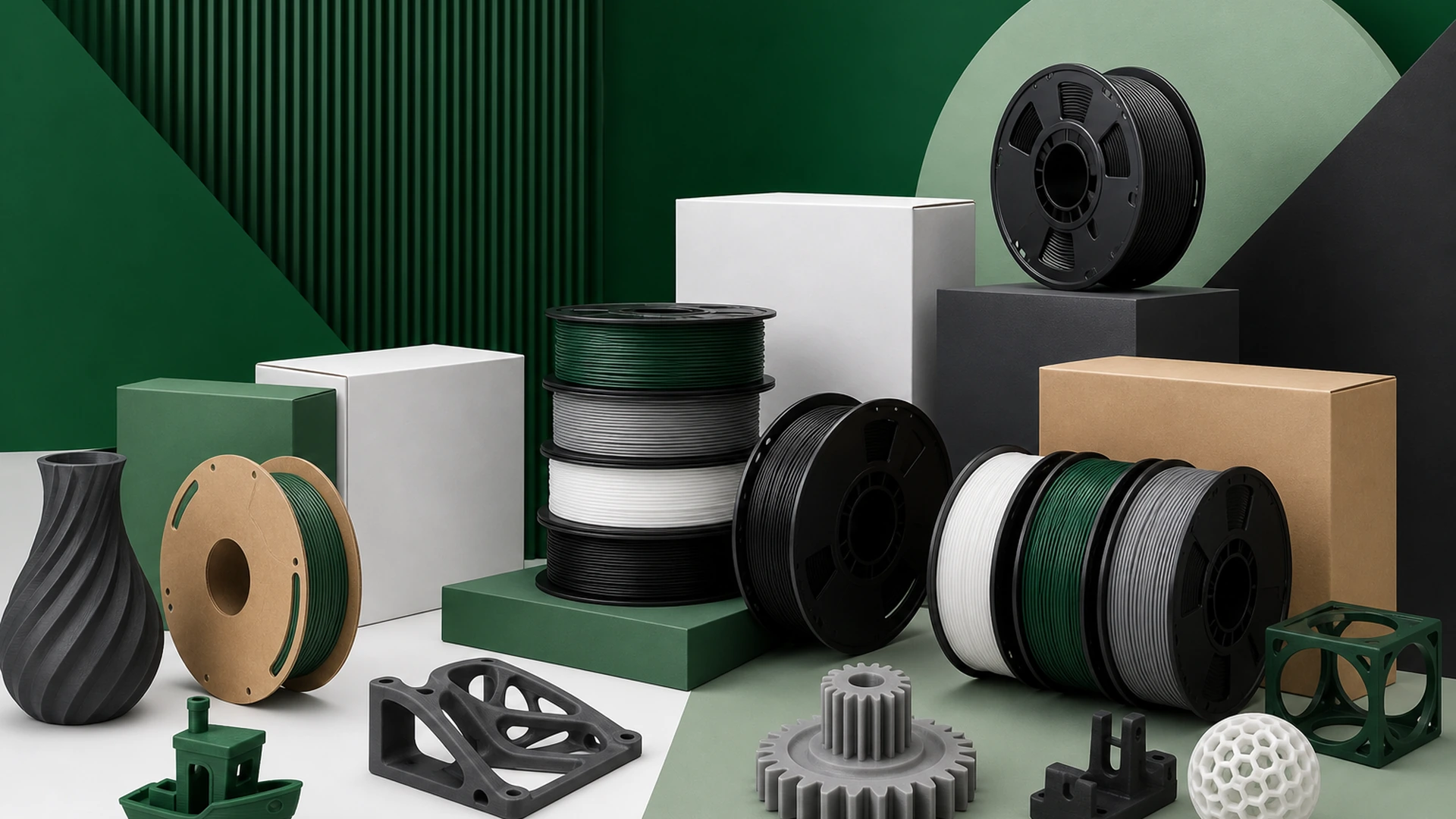
Define the range
The details behind your product.
Use these starting points to describe what you need. Available configurations and commercial terms depend on the selected material and order.
Private-label planning checklist- Material & application
- The parts your customers print, their printer setup, and the materials you want to include.
- Color & finish
- A physical color reference or target finish. Confirm the selected color on a sample before approving the range.
- Diameter & spool
- Required filament diameter, net weight, spool dimensions, and feeder compatibility.
- Label & artwork
- Brand artwork, product naming, barcode requirements, and the languages used in your market.
- Bag, box & carton
- Your preferred pack format, storage needs, carton quantities, and retail presentation.
- Documents & delivery
- Product documents required by your market, order quantities, destination, and requested delivery date.
From the first brief to an agreed specification.
Keep product decisions in writing before moving to an order.
- 01
Send the requirements
Share your material shortlist, target market, quantities, and packaging needs. Include a reference if you already have one.
- 02
Agree what to evaluate
Confirm feasible options, sample availability, costs, and the checks needed for your selected grade and color.
- 03
Confirm the order details
Record the accepted specification, artwork, packaging, documents, and commercial terms. Use that reference for later orders.
Before you send a brief.
What is the minimum order quantity?
Include the quantity for each material and color, and whether you need custom packaging. The minimum quantity and price need to be confirmed for that configuration in the quotation.
Can I request a sample first?
Yes, you can ask about samples for your selected material and color. Availability, sample costs, shipping, and the evaluation scope are confirmed for the request before anything is arranged.
What if my product range is not decided yet?
Start with the parts your customers print, their equipment, and the markets you serve. Use the filament catalog to build a shortlist; you do not need finished artwork to begin a discussion.
Tell us what you want to put your name on.
A material shortlist, destination, and estimated quantity are a useful place to start.