
Private-Label Filament
Brief Checklist
Define the market, product, color, spool, artwork, carton, samples, quantities, and launch requirements before requesting a private-label quotation.
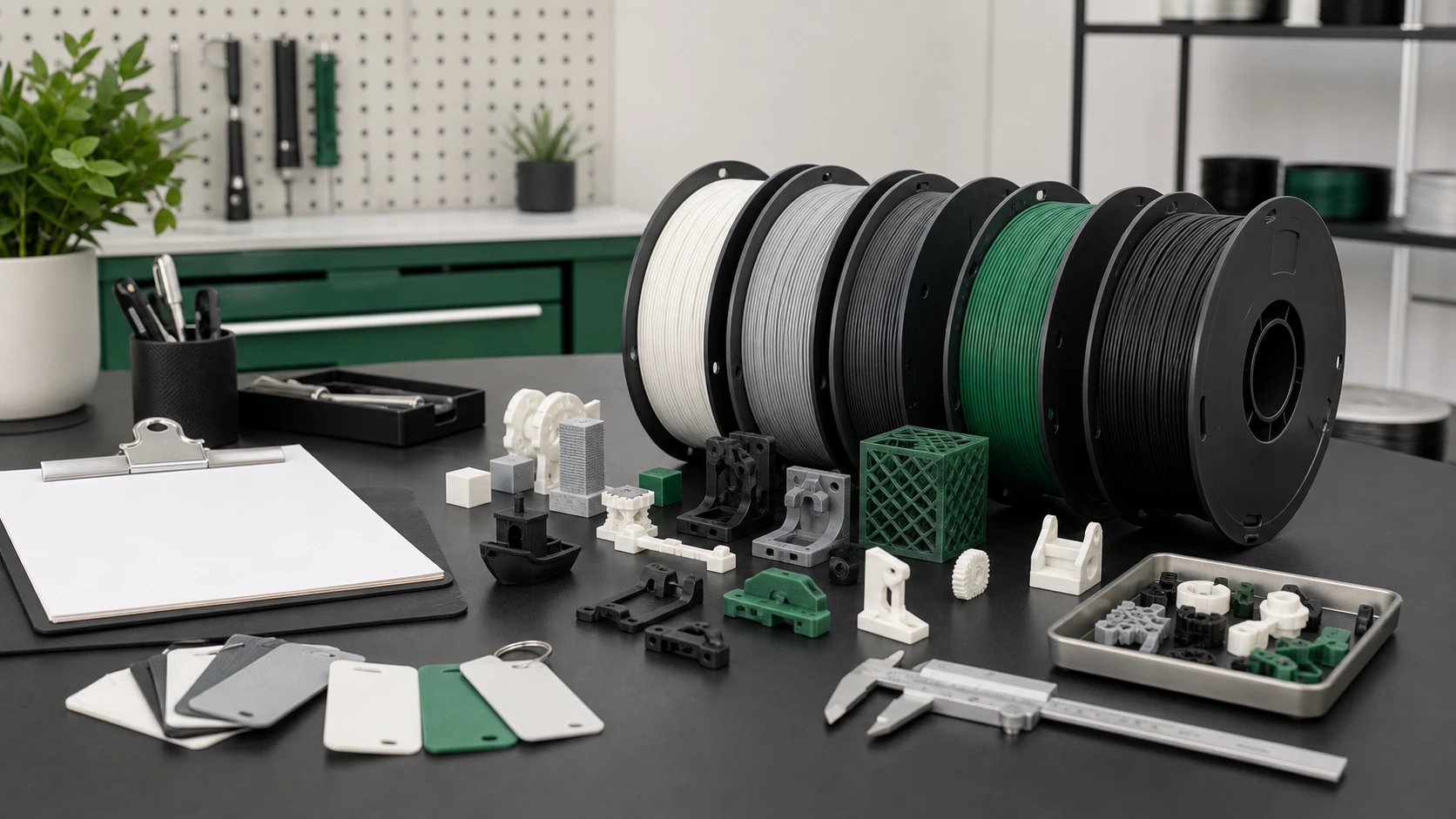
Define the market, product, color, spool, artwork, carton, samples, quantities, and launch requirements before requesting a private-label quotation.
- Destination markets, channels, buyer types, and launch date
- Opening materials, colors, finishes, and target applications
- Forecast or order quantity by SKU and expected replenishment
- Competitive reference used for positioning, not copied content
- Exact grade or qualification question
A private-label request is easier to review when every choice belongs to one named sellable configuration.
Start with the buyer, intended channel, printing conditions, material question, visual reference, spool format, pack identity, and approval route. Keep confirmed references separate from items that still need supplier review.
The aim is not to turn an early concept into a promise. It is to make the first discussion specific enough that samples, artwork, documents, and a written quotation can be compared against the same brief.
Frame the opening range before selecting artwork
An opening range should explain what each proposed item is for. A long material list can create unnecessary overlap when two items serve the same buyer need but use different names, finishes, or packs.
Begin with the use case, printer environment, sales channel, and reason each configuration belongs in the range.
Mark each item as an opening release or later extension, keeping the first sample and quotation review within a deliberate scope.
Define the buyer and channel context
State who will review the range and where the product is expected to be offered. A distributor, printer program, online store, studio, and internal technical team may ask different questions about labels, language, product information, sample handling, and repeat ordering.
Record the destination market and the sales or fulfilment path as review inputs. They help identify document, artwork, carton, barcode, and handling questions without assuming that any particular option applies.
Name one owner for each configuration to reconcile material, spool, identity, channel, and approval questions before handoff.
Record market and language questions beside the item; never assume one label, document set, or product name fits every destination.
Give every proposed configuration a clear role
For each proposed item, describe the part, printer, appearance, or channel need that makes it distinct. Use a short range role such as everyday material, special visual effect, technical review candidate, or printer-compatible starting point. Do not use a role as a material claim.
A useful brief also identifies the items that are intentionally not included. This prevents a first quotation from being treated as an unbounded catalog request.
Assign clear responsibility for listing data, retail presentation, distributor records, and printer-program information.
Name excluded grades, pack routes, markets, and customization paths instead of leaving the opening review ambiguous.
Brief prompts
- Who is expected to review and approve this configuration?
- What printer, application, channel, or finish question does it answer?
- Which items are needed for the first review, and which are future possibilities?
- Which market, language, handling, or information requirements remain open?
- Who owns the range record, and where is the current version retained?
- Which event moves a later-extension item into a new sample and quotation review?
Define one complete sellable SKU
A material name alone is not a SKU. The working configuration should connect the selected material question with diameter, color or effect reference, net spool format, printed-part reference, label identity, carton route, and requested document scope.
Write the unknowns into the same record. A buyer may know the intended printer and color direction while still needing confirmation of the exact grade, spool envelope, pack method, or applicable document.
Keeping these questions visible avoids approving only one disconnected part of the product.
Mark the exact-grade field open or confirmed by a written source; never let a family label silently fill that decision.
One owner should reconcile grade, physical reference, spool, label, pack, and document identifiers before review.
Link material and printer inputs to the approval sample
Name the intended part, printer family, nozzle or feeder constraint where relevant, and the review method that will decide whether a sample is useful. Describe material-family questions as questions for an exact commercial grade rather than as family-level guarantees.
If several printers will be used, record the differences that could change the review: nozzle, enclosure, feeder, profile control, build surface, part geometry, or operating conditions. A single accepted print may not represent every production path.
Capture the retained sample's equipment, relevant hardware, profile source, orientation, geometry, and observation date.
Choose a representative part that exposes the actual decision without implying performance on every geometry or printer.
Control the physical identity of the item
Use a physical or measured reference for color, translucency, sheen, particle appearance, or another visual effect. Screen images can start a discussion, but they should not become the only accepted reference for a repeat order.
Keep the diameter, net weight, spool dimensions, winding expectation, storage route, and product identifier together. This gives the buyer a way to recognize the same configuration when an item is sampled, quoted, packed, or reordered.
Record the reference owner, viewing condition, part geometry, and approved comparison note for every visual review.
Use one identifier for the spool, storage record, printed part, proof, pack review, quotation, and repeat inquiry.
Brief prompts
- What exact configuration is being reviewed, and what is still open?
- Which physical sample, printed part, or measured reference will be retained?
- Which printer and process conditions are representative?
- How will the item be identified on the spool, label, carton, and written record?
- Who owns the exact-grade status and records the written source that changes it?
- Which identifier follows the configuration through sample, artwork, quotation, and archive?
Control artwork, label, and pack release as one review
Artwork should describe a known item, not an undefined product. Before a proof is treated as an approval reference, link it to the selected material question, visual reference, spool format, destination language, product identity, and sales-pack route.
This does not require every commercial detail to be final at the first discussion.
It requires each revision to show which part of the configuration it belongs to and which owner can approve the next change.
Keep the source file, exported proof, revision note, and approval response in one lineage so obsolete artwork cannot return.
Separate visual-brand approval from product-data approval, and identify each owner and reviewed configuration.
Set a controlled artwork handoff
Provide the approved file source, brand rules, product naming convention, color reference owner, language source, and barcode responsibility where applicable. Record whether the buyer needs a proof, sample label, carton review, or another controlled reference before release.
Avoid placing confidential artwork files or uncontrolled version history into a free-text request. A clear file reference and a named approval owner make the review easier to trace.
Assign language, legal-text, and barcode ownership; a supplier discussion does not approve buyer-controlled content.
Name the proof medium: controlled digital proof, physical label sample, carton reference, or printed-part presentation check.
Keep pack and document questions attached to the SKU
Describe the sales pack, carton, mixed-SKU expectation, shipment path, and handling risks as requirements to be reviewed. The intended presentation and transport route may affect what needs a physical review.
Request technical, safety, compliance, or inspection material only for the exact grade, market, language, and intended use that need review. A document with a similar family name is not automatically relevant to the selected configuration.
Map only applicable layers from spool and barrier protection through label, sales pack, carton, pallet, and handoff.
Record the grade, version, issuer, language, market, and use question for every requested document.
Brief prompts
- Which artwork version belongs to this exact SKU?
- Who owns label, language, barcode, and proof approval?
- Which pack assumptions must be checked with the sample or quotation?
- Which document title, version, grade, and market question is being requested?
- Which file and proof identifiers establish the approved artwork lineage?
- What change in grade, market, language, barcode, or pack route reopens approval?
Review samples, references, and deviations deliberately
A sample review is more useful when it tests a named decision. Define what will be printed, observed, compared, and approved before the sample is sent.
The selected material, color direction, spool format, and visual target should remain connected through the review.
Give each requested sample one decision question and reviewer so every observation has a clear owner and next action.
Sequence material, part, visual, artwork, and pack reviews so an open early decision is never hidden by a later proof.
Set an approval sequence
Assign the reviewer for the material sample, printed part, color or surface reference, label or artwork proof, and pack reference. The same person does not need to approve every item, but the handoff should be visible.
Describe acceptance in observable terms. Name the representative part, viewing condition, printer, reference owner, or comparison method rather than using broad statements such as approved quality.
Record equipment, geometry, orientation, lighting, conditioning, and the retained reference for each comparison.
Name the record owner and where the next reviewer finds sample identity, comments, open points, and date.
Record changes without losing the accepted reference
When a color direction, material question, label, carton, document, or sample changes, note the affected identifier, reason, review owner, and next decision.
Retain the former reference until the replacement is explicitly accepted.
This record supports a useful supplier conversation without claiming that a changed item can be supplied, performs the same way, or is automatically suitable for the intended market.
Log the observed difference, evidence, affected configuration, containment question, owner, and open disposition.
When replacing a reference, identify the superseded item and re-review scope before using the new sample.
Brief prompts
- Which approval must happen before the next one can begin?
- What physical and written references are retained after approval?
- What change requires a new sample, proof, or document request?
- Who records the decision date and the configuration it belongs to?
- Which field captures the observation conditions and the retained comparison object?
- Who can replace a reference, and which change trigger requires the review to restart?
Carry one approved configuration into quotation and repeat review
A quotation request should point to the same configuration discussed in the range brief. Identify the requested material scope, color or effect reference, diameter, spool, label, carton, market, documents, quantity question, destination, and requested review timing without treating any of them as confirmed.
Save a quotation snapshot with configuration identifier, inquiry date, scope, assumptions, linked references, and written response.
Archive retained references, approved proofs, document versions, decision notes, quotation, and every record owner.
Keep a repeat-order record that can be checked
Use a configuration identifier that connects the grade question, color reference, spool format, label, carton, sample, document, and decision date.
The identifier does not replace the written quotation or project review; it helps the parties find the same references again.
If a future request changes any of these items, present it as a new review question.
This prevents an old sample or artwork approval from being assumed to cover a different configuration.
List change triggers for grade, visual reference, spool, label, pack, market, document, printer path, and sample.
Describe future requests as deltas so unchanged references and reopened decisions remain visible to both parties.
Name one owner who confirms every required physical and written reference is linked before review.
Brief prompts
- Which references must be attached to the quotation request?
- Which accepted items must be retained for a repeat review?
- What would make a future request a changed configuration?
- Who can confirm that the requested record is complete enough to review?
- Where are the quotation snapshot and linked reference versions archived?
- Which named change trigger turns a repeat request into a new configuration review?

 Material selection guide
Match material to the part and printer
Novtau technical team · 20 min read
 Quality and release brief
Write the checks and records into the order
Novtau technical team · 8 min read
 Program examples
Review filament program patterns
Novtau technical team · Planning library